
The Avalon Q is a new ASIC miner from Canaan, released in 2025, meant to bring more powerful Bitcoin (SHA-256) mining into home setups. It aims to balance high hash rates with lower noise, manageable power consumption, and better efficiency. It’s part of Canaan’s push toward “home-friendly” miners.
Key Specifications
Here are the main specs (as advertised and verified by various sources) for the Avalon Q:
| Spec | Details |
|---|---|
| Hash Rate | ~ 90 TH/s (±5%) in “Super” mode; lower in other modes. |
| Power Consumption | ~ 1,674 W at full load (“Super” mode). In “Eco” mode consumption drops (approx. 800-900 W). |
| Energy Efficiency | Around 18.6 joules per terahash (J/TH) in Super mode. Slightly better in lower-power modes. |
| Noise Level | Advertised 45 dB (quiet mode) up to ~ 65 dB in heavier modes/higher ambient temperature. |
| Voltage / Power Input | AC input range 110-240 V, so usable in many jurisdictions. But high current draw in lower-voltage systems may require robust wiring/circuit breakers. |
| Physical & Thermal | Dimensions approx. 455 × 130.5 × 440 mm, weight about 10.5 kg. Dual-fan air cooling. Operates at ambient temperatures around -5°C to 35-45°C depending on mode. |
| Connectivity & Features | Ethernet; some versions include Wi-Fi or USB stick for Wi-Fi; app monitoring (“Avalon Family App”); different power modes (Super, Standard, Eco) to adjust performance/power trade-offs. |
How It Works in Practice
Here are observations from real-world users or reviews:
-
The different modes allow users to scale down energy use/noise/heat in exchange for lower hash rate. E.g. Eco mode might deliver ~ 50-55 TH/s at ~ 800-900 W.
-
Heat is still a concern in high power modes. At full load the exhaust gets hot. Good ventilation or ambient cooling becomes essential.
-
Noise is much quieter than industrial miners, especially in lower power modes, but in full power mode and/or high ambient temperature the noise rises.
-
Electricity cost is a big factor: daily profitability depends heavily on local power rates. With high power draw, even small cost increases per kWh eat into profit.
Pros and Cons
Here are the main advantages and disadvantages of the Avalon Q, especially in a home setting.
Pros:
-
High Hash Rate for a Home Miner — 90 TH/s is very strong for non-industrial setups.
-
Adjustable Power / Performance Modes — you can dial it back to lower power to reduce noise, heat, and electricity costs.
-
Quieter Than Many Industrial Miners — around 45 dB in certain modes is quite tolerable if you want to run it in a garage, basement, etc.
-
Universal Voltage — 110-240 V input allows usage in many parts of the world without special power conversion.
-
Decent Efficiency — ~ 18.6 J/TH at full power is competitive.
Cons:
-
High Power Usage — 1.6-1.7 kW is large, especially in lower voltage circuits; may require dedicated circuits or upgrades to home wiring.
-
Heat Production — even with quiet fans, in full mode you will generate a lot of waste heat. In warmer climates or poorly ventilated rooms this could be problematic.
-
Cost of Electricity — to make profit, you’ll need low electricity rates. If your power is expensive, running this full time may result in loss or very thin margins.
-
Noise in High Mode — while quieter than many industrial units, it's still audible; full load raises noise.
-
Initial Cost / ROI Uncertainty — the hardware cost + shipping + installation + power/ventilation can take time to pay back.
Is It Right for Home Use?
Whether the Avalon Q makes sense depends heavily on several local factors. Here are things to consider:
-
Electricity cost per kWh — if your power is cheap, the higher hash rates are more attractive. If expensive, you may prefer running in Eco mode or even smaller miners.
-
Home wiring / circuit capacity — you’ll need a circuit that can safely supply ≥ 1600 W (plus margin) without tripping breakers or raising fire risk.
-
Ventilation / Temperature Control — managing heat is essential. Some users report garages getting extremely hot under full load.
-
Noise tolerance — even though it’s quieter than many ASICs, it still produces noise. If you're sensitive or close to living/working areas, this matters.
-
Space — size (just over half a metre in one dimension) plus cooling clearance needs must be accounted for.
-
Regulatory / utility constraints — some regions limit residential electricity consumption, or you may have rates/tariffs that penalize high load.
Financial Snapshot (Example)
Let’s run a hypothetical:
-
Suppose you run in “Super” mode: 90 TH/s, 1,674 W
-
Electricity cost: £ 0.15 / kWh (just an example, UK domestic rate can vary)
-
Runtime: 24 hours a day
Power use per day = 1.674 kW × 24 h = ≈ 40.2 kWh
Daily electricity cost = 40.2 × 0.15 = £ 6.03
Revenue depends heavily on the Bitcoin network difficulty, block reward, Bitcoin price, and pool fees. If revenue for 90 TH/s is, say, £8-£10/day (just speculative), then net profit might be £2-£4/day after electricity (before considering cooling/maintenance/etc.). But if electricity cost rises or price/difficulty worsens, margin shrinks or even flips negative.
So ROI (return on investment) might take many months or even over a year, depending on how much you paid for the unit and how cheap your power is.
Conclusion
The Avalon Q is one of the better options in 2025 for miners who want serious hash rate inside a home environment. It’s a strong technical spec, with features that make home use more practical than older noisier, more power-hungry equipment.
However, it’s not a no-brainer. Whether it’s “worth it” depends on your local power costs, your tolerance for heat/noise, and how much you can invest upfront. For many hobbyists or small-scale home miners, running in Eco or Standard mode might be the most sensible path.
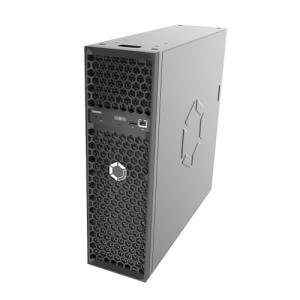
Exclusive Launch Avalon Q 90TH/s Bitcoin Miner by New Canaan - 1674W 18.6J/TH ASIC Miner, Ultra-Quiet Home Mining, Original US Power Cord Included, Ship on early of April Shipping
Product information
Product Review Score
4.18 out of 5 stars
160 reviews